I've been living and working this corridor since 1992. Thirty-four years. I've sat with clients through the post-2008 freeze, the 2016–17 frenzy, the pandemic run-up, and the rate-shock correction of 2022. Each cycle has its own fingerprint, and Q1 2026 has one I recognize clearly: this is a market that rewards patience and long lifestyle horizons.
The headlines from the Lower Mainland don't apply here. The Sea to Sky is not a suburb. It is a destination — for people who've decided that how they live matters as much as where they invest. That distinction is what insulates this corridor when the broader market softens, and it's why smart money continues to move here even when Vancouver pulls back.
With the Bank of Canada holding at 2.25%, the rate anxiety that paralyzed buyers through 2023 and 2024 has materially eased. What's replaced it isn't euphoria - it's clarity. Buyers are analytical. Sellers need to match that energy.
Here is what my team and I are seeing on the ground across all three communities...
Resilient Luxury and a Smart Pivot Downmarket:
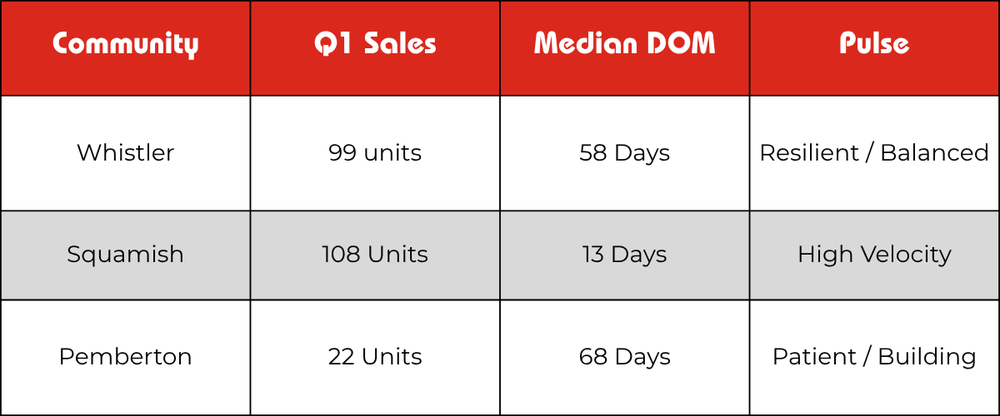
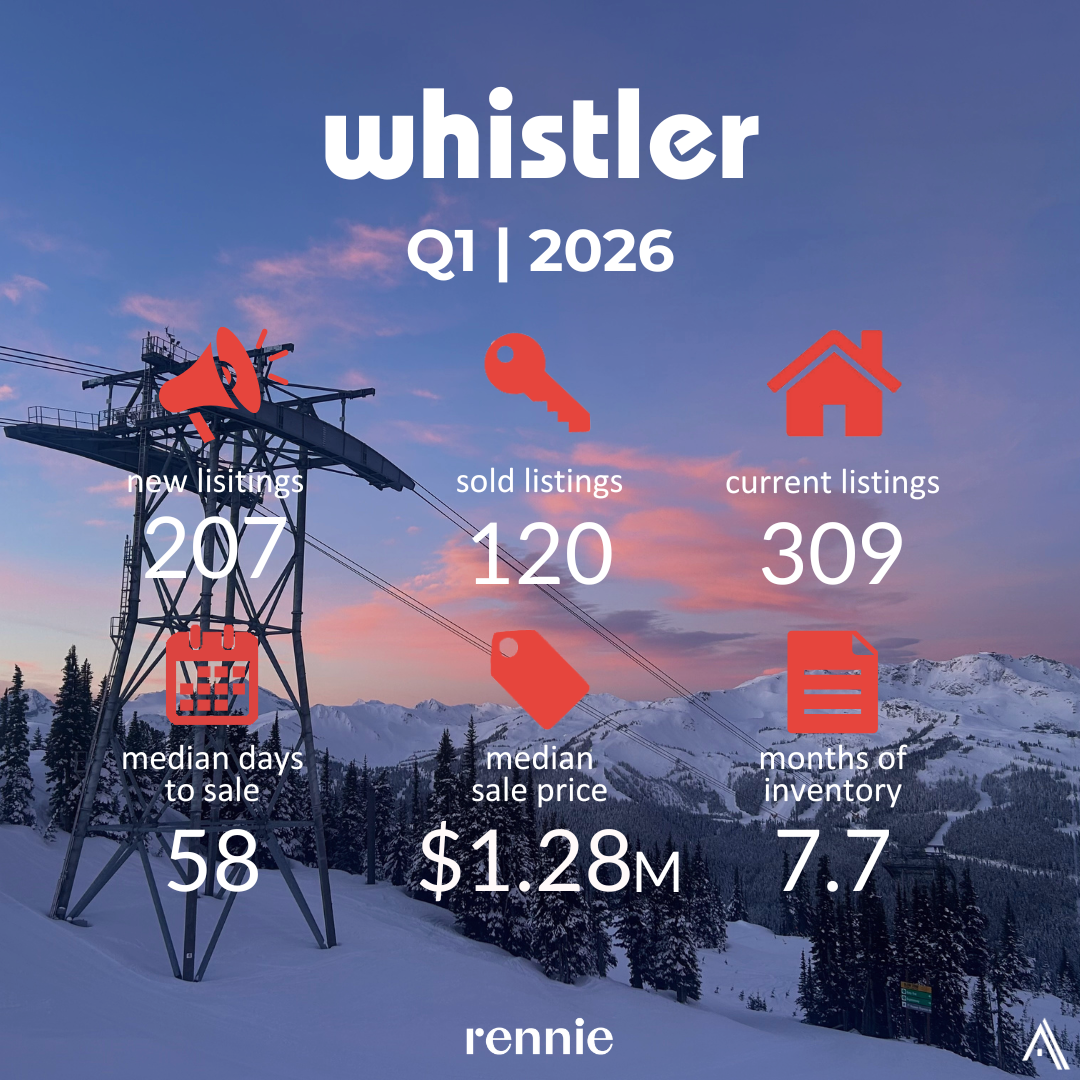
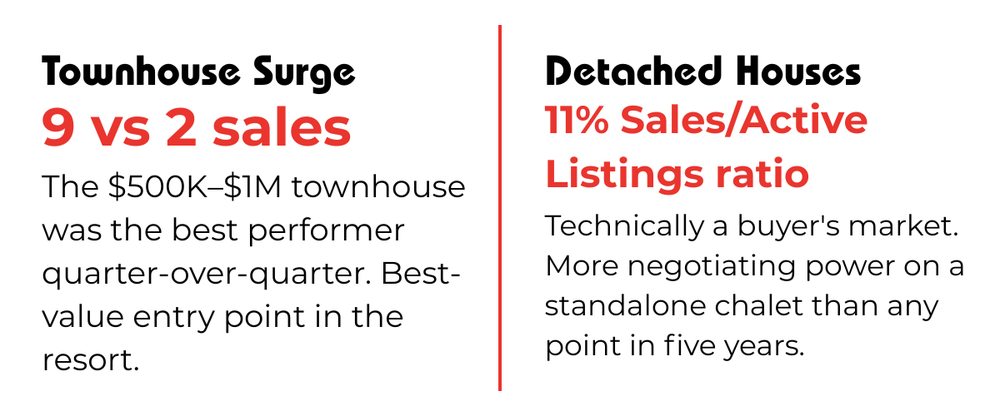
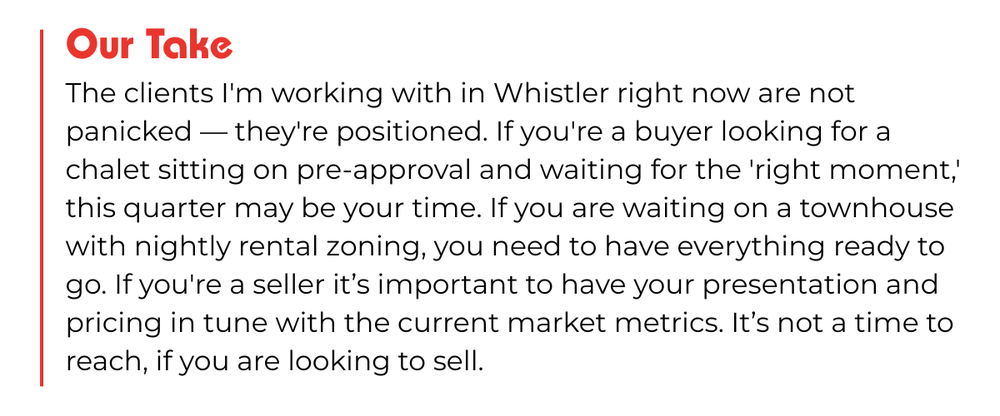
Ninety-nine sales. Almost identical to Q1 2025's 100. On the surface, Whistler looks flat. But when you dig into the composition of those sales, you see something more interesting: total dollar volume dropped roughly 15% to $161.1M, which tells us that capital is absolutely still flowing into the resort — it's just flowing toward smarter price points rather than the $5M-plus mid-luxury chalets that dominated the last cycle.
This isn't a retreat. It's a recalibration. The buyers who used to value a property on emotion are gone. The buyers writing offers today have done their homework.
Volume Down, Velocity Up — Don't Confuse the Two:
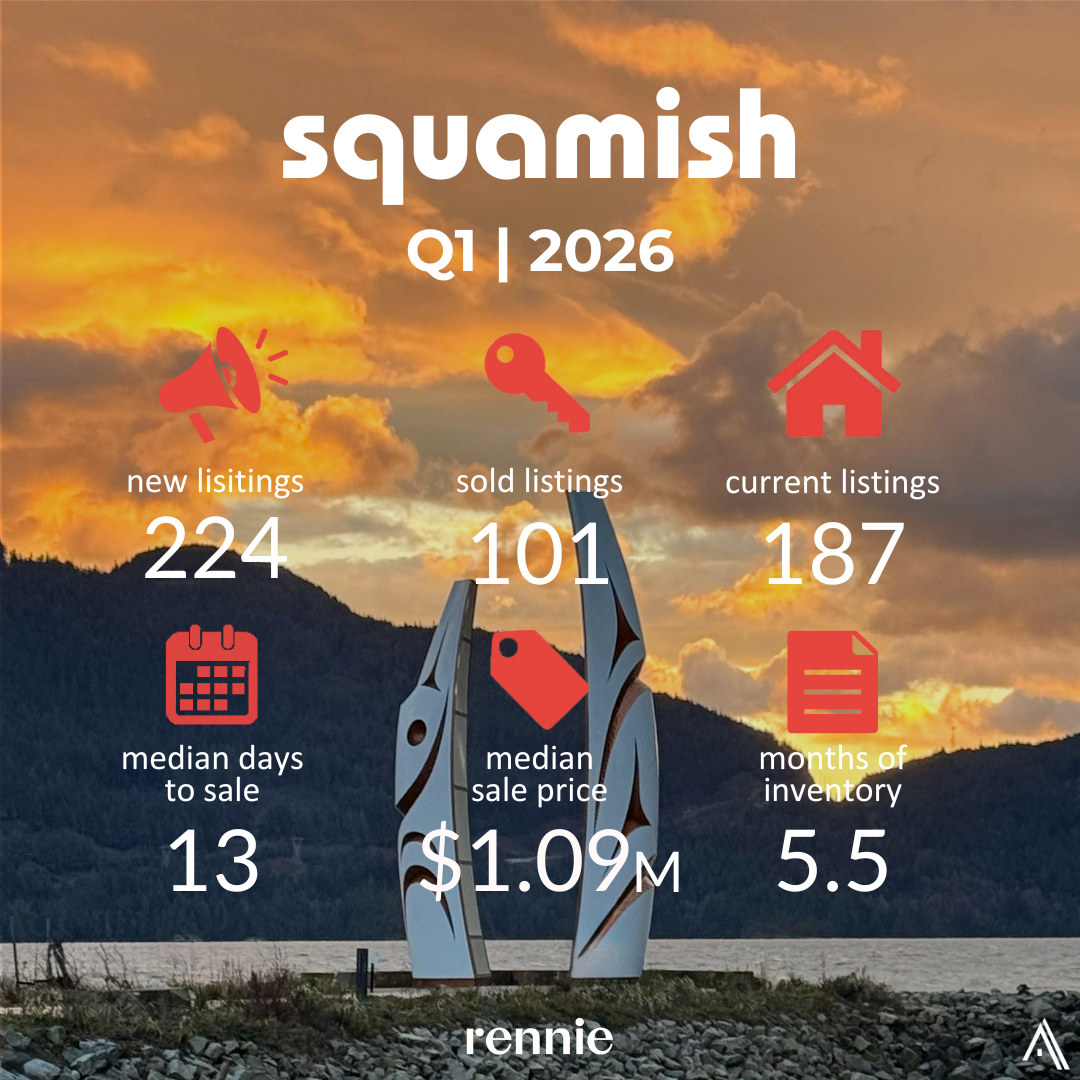
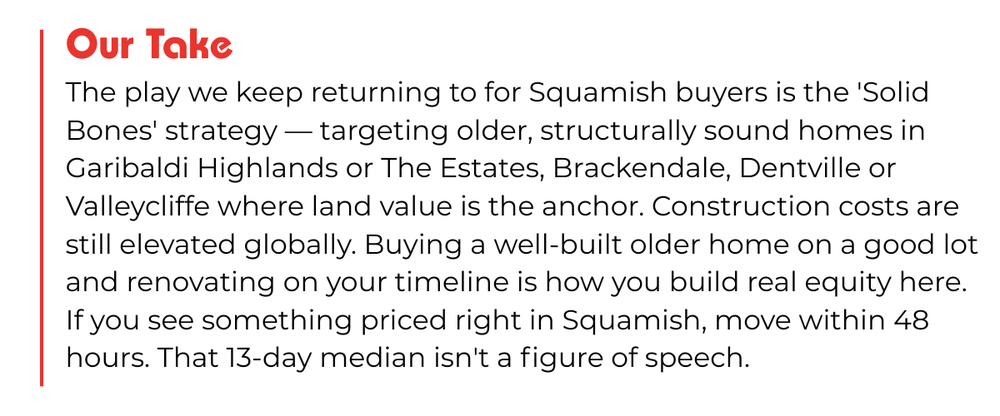
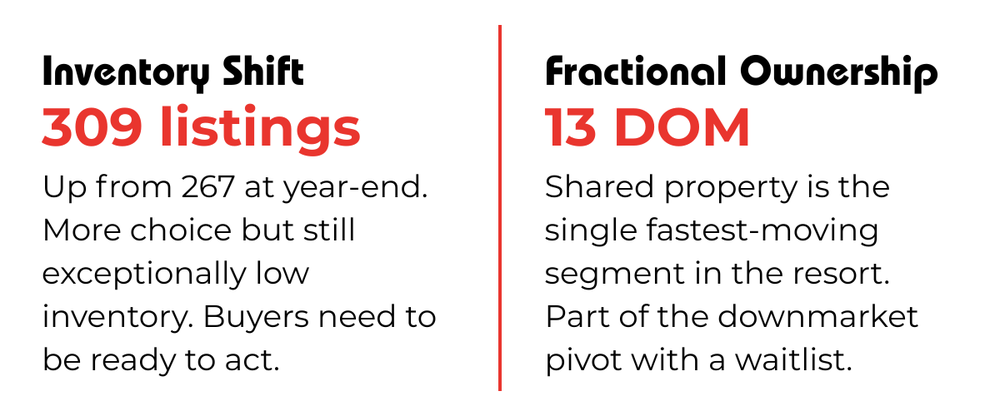
The headline number — 108 sales versus 160 in Q1 2025, a 32.5% drop will scare people who don't understand this market. It shouldn't. Squamish is not soft. Squamish is selective. The homes priced correctly are selling in 13 days. That's not a slow market. That's a market with a finely tuned sense of value. Q1 2025 was an outlier within the last 5 years and it’s important to understand that context.
What's driving the volume reduction isn't lack of demand - it's lack of supply available to move the market. How many Sellers in over the past year had to insert a “subject to Seller finding a property”? It was a liquidity crisis driven by lack of inventory that seems to be loosening as I write this. With more selection, Sellers are able to make the move unlocking demand. I’m expecting a big Q2 in Squamish but it is important that Sellers do the work, price precisely, and present well.
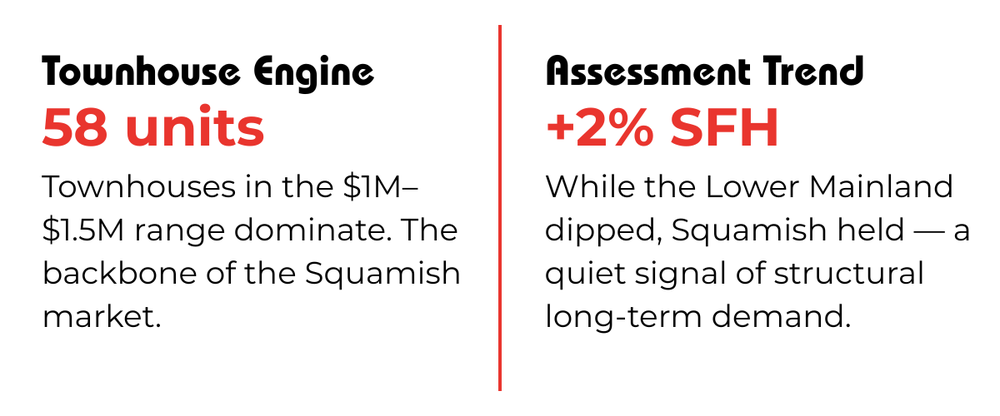
Squamish also posted a modest 2% gain in assessed value for single-family homes — a regional outlier when most of the Lower Mainland watched assessments slip. That reflects sustained demand from buyers relocating from Vancouver who've done the math: the lifestyle- per-dollar equation in Squamish still wins.
The Patient Play — But the Valley Doesn't Wait Forever:
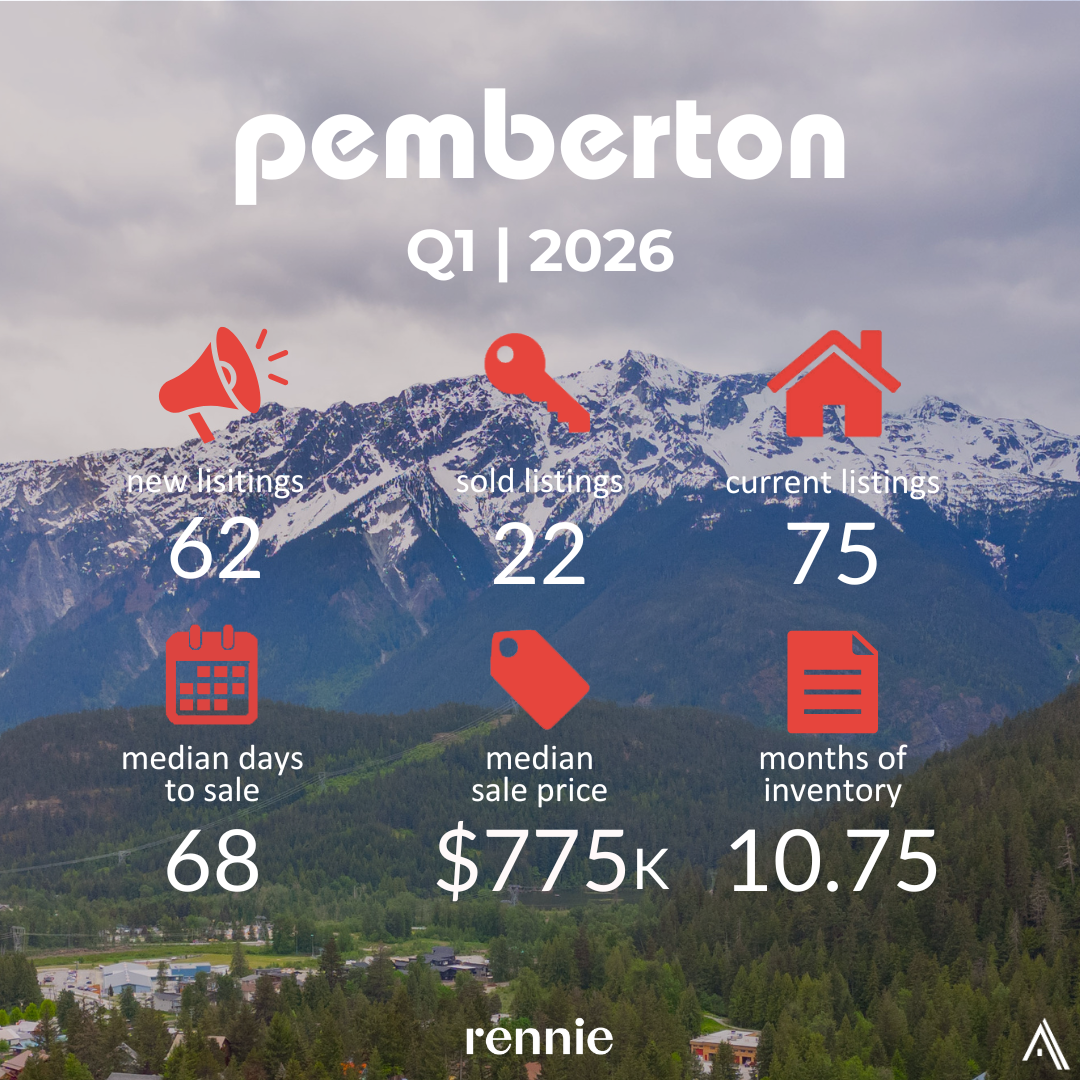
Twenty-two sales and a 68-day median might read as sleepy. It isn't. Pemberton has always operated on its own seasonal rhythm. Q1 is the valley's pause before spring opens things up and 2026 is following that pattern faithfully. What the closed-sales number doesn't capture is the activity building beneath the surface: multiple contracts currently in motion, motivated sellers who've listed early, and buyers scouting land that hasn't come to market in years.
The median sale price at $775K tells you something important about the Pemberton market: Buyer’s saw value in the community at the entry level and acted. Sellers in the mid range aren't people who bought on speculation in 2021 and are scrambling to exit. They are lifestyle owners who understand the long-term value of the Mt. Currie backdrop and the agricultural land reserve that will permanently limit density in the valley. Values will remain stable here because the fundamentals support it.
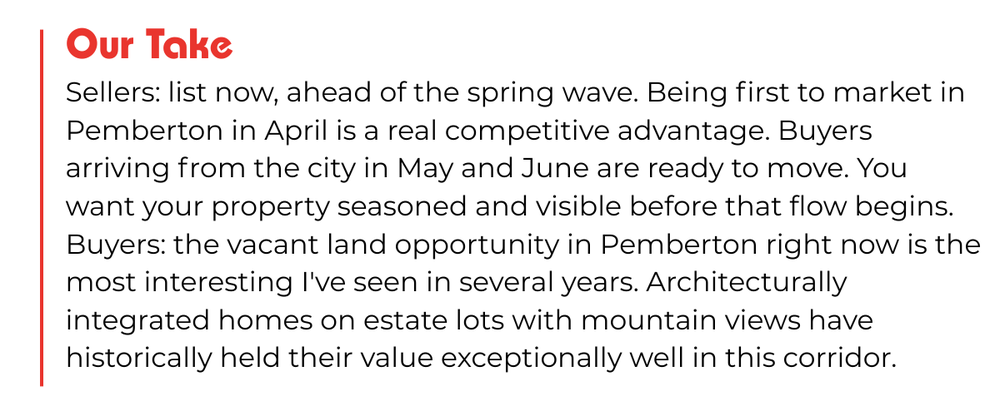
Active listings have moved from 51 at year-end to 75, which isn’t a huge shift but I’m feeling like this Spring is starting earlier with warmer weather and lower snowpack. Having properties presented and priced well in the early days, will create opportunities to get things done.
The Sea to Sky Corridor is a lifestyle market. It always has been. I believe that 2026 is, across all three communities, a generational lifestyle-building window for people willing to be strategic and patient in equal measure.
The corridor's core thesis hasn't changed in three decades: finite land, world-class mountain lifestyle, and communities that attract a specific kind of person - one who values access to the mountains, the outdoors, real relationships, and a life that doesn't require two hours of highway driving to feel alive. That thesis doesn't soften when the BoC adjusts rates. It deepens.
My team - Mitch, Binx, and I have watched this corridor through every cycle since 1999. We're not going to tell you the market is great when it isn't, and we're not going to tell you it's bad when the data says otherwise. What we'll tell you is the truth about your specific neighbourhood, your property type, your price band, and your timeline. That's the only analysis that actually matters.
If you want to sit down and talk through what these numbers mean for your situation — whether you're holding, buying, selling, or just watching — reach out directly. That conversation is free and it's always worth having.
Your move,
Rob